Trunkbase is built from a small number of parts, and they fit together in one sentence: your files are decomposed into Notes, Notes live in your Vault, and everything else — search, connections, AI access — is derived from them.
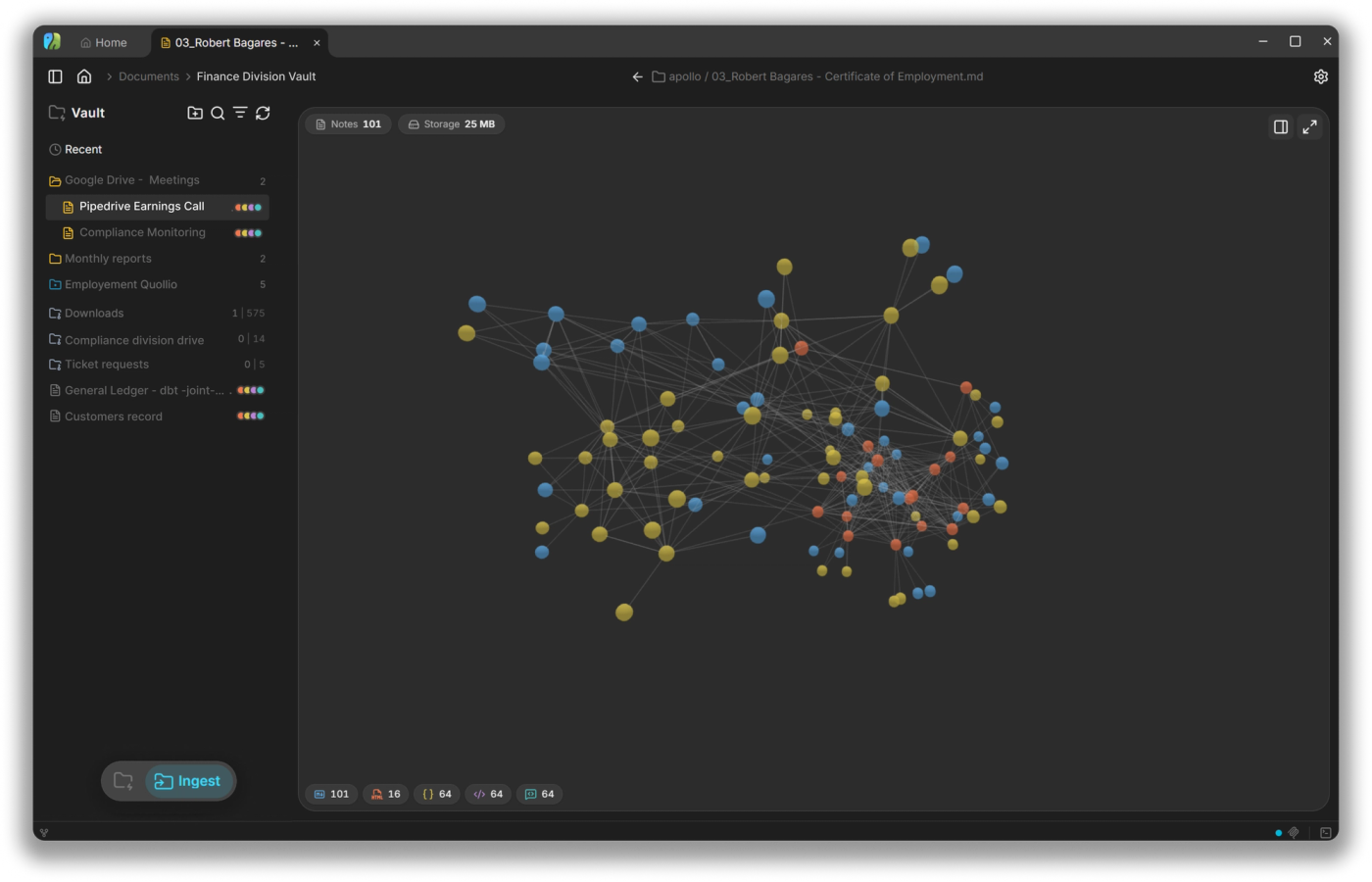
Here's the flow, end to end:
Your file  →  decomposed  →  Note  →  stored in your Vault
                                          ↓
                            self-managing index & knowledge graph
                                          ↓
                            search, connections, and your AI
Two things are worth understanding before you dive into the parts.
First: why decompose at all? A folder of PDFs and spreadsheets is what engineers call unstructured — every file has its own shape, so nothing can be compared, aggregated, or cross-referenced across them. Ordinary files can only ever be opened, never queried. Decomposing every document into the same clean structure is what promotes your pile of files into a real database — one that can answer questions, not just store them.
Second: your files are always the source of truth. The database Trunkbase maintains — the search index, the knowledge graph — is a fast, derived copy of what your files already say. Change a file and it updates. Damage or delete it and it rebuilds. Nothing valuable ever lives only in the database.
The parts
- Vault — the folder you own where everything lives. Plain files, no account, no cloud.
- Notes — what your documents become: clean, readable, AI-friendly records.
- Ingest — bring a file in now. Drag, drop, done.
- Watch a folder — keep bringing files in, automatically.
- Tunnel — just map what's there; decide later.
The three intake modes are a ladder of commitment — ingest one file, watch a folder continuously, or tunnel a folder you're not ready to import. You can mix them freely, and every rung keeps the same promise: your original files are never moved, modified, or deleted.